
The Naturally Occurring
Benefits of Cultural Space
an analysis of the impacts of cultural space on urban fabric
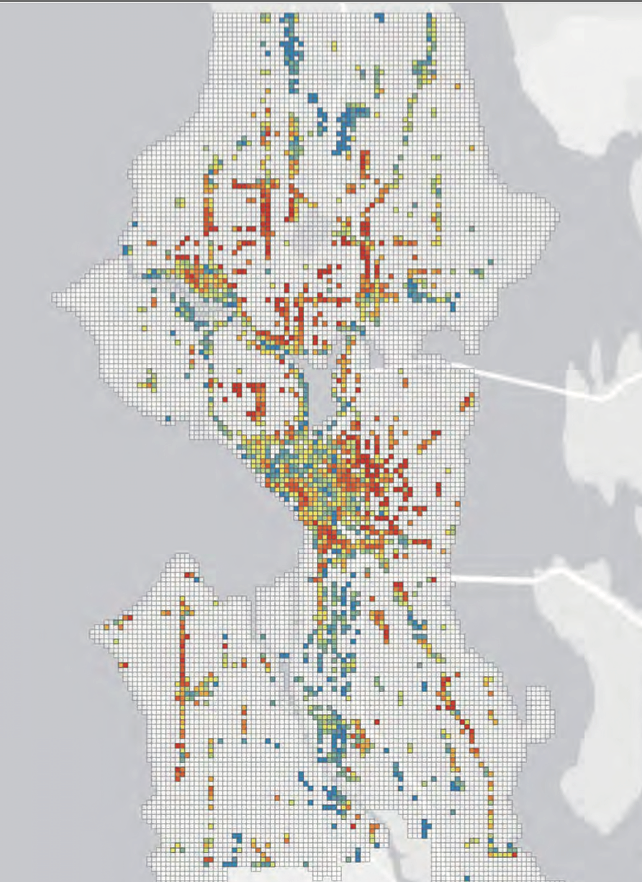
In 2016 I worked with the Preservation Green Lab, a project of the National Trust for Historic Preservation, to leverage a brilliant system they’d developed with Gehl Studio to map “urban vitality” in Seattle.
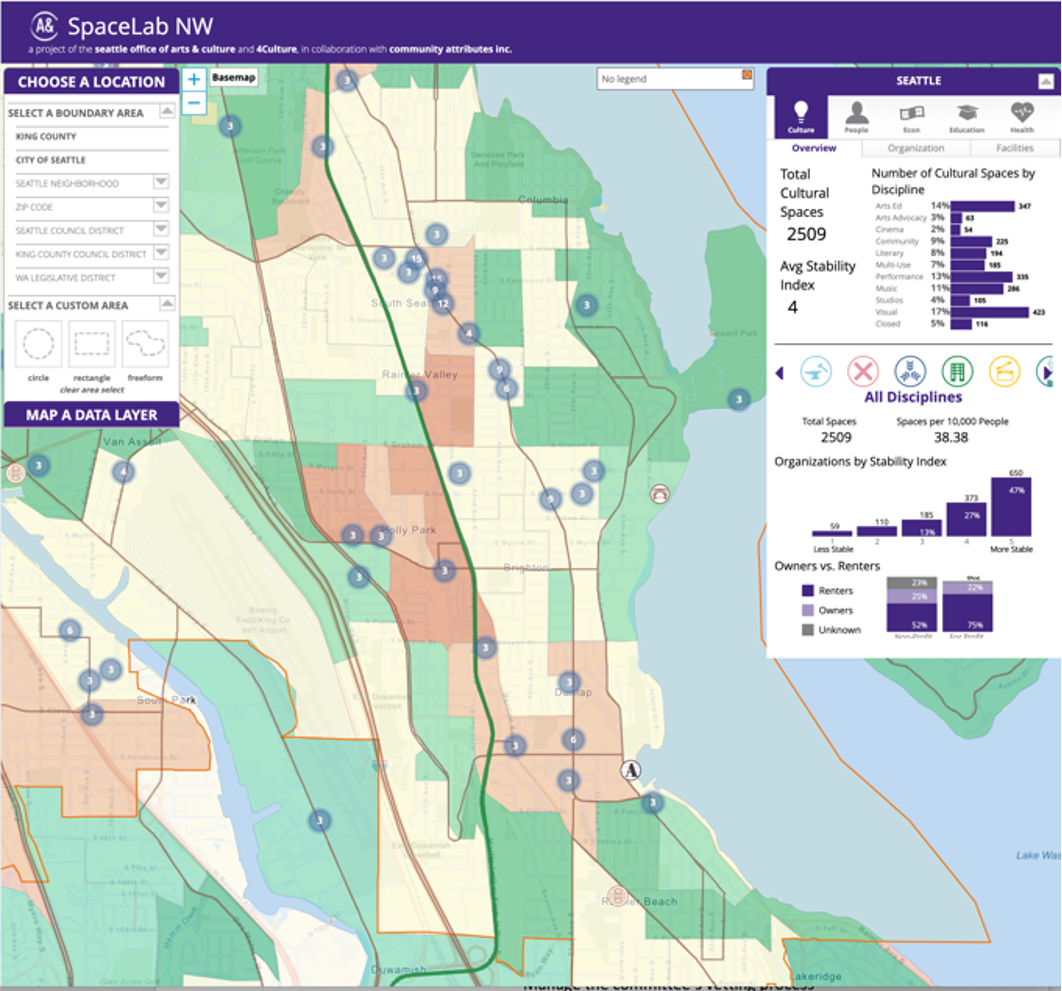
The collaboration leveraged the cultural space mapping exercise I’d initiated at the City of Seattle called SpaceLab NW. We mapped over 1,200 cultural spaces onto a grid that tracked “urban indicators” such as Walk Score, and the presence of outdoor seating permits, and the hours that businesses stayed open, and property values per square foot.
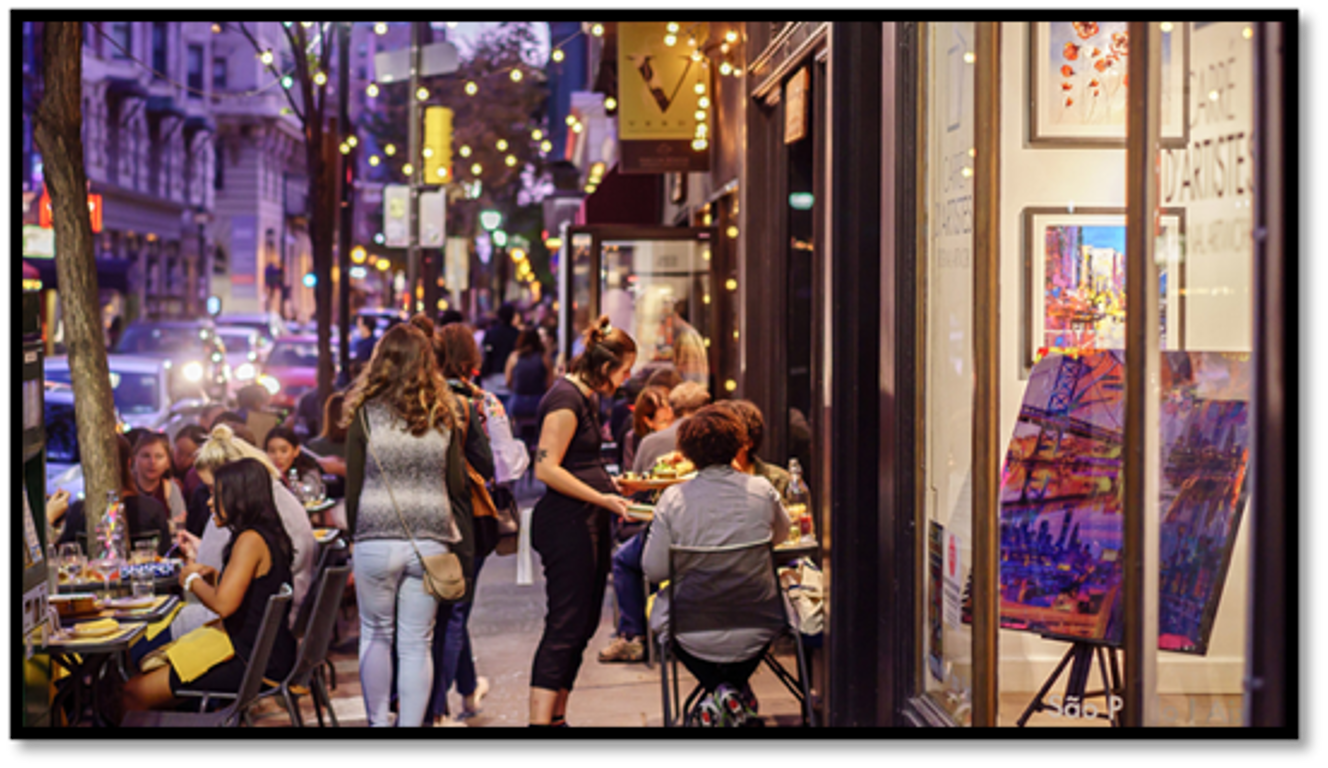
What we found was that the presence of a cultural space on a commercial block increased the likelihood of a high “urban vitality” index.
A commercial block of Seattle with a cultural space, when compared to an equivalent commercial block without a cultural space, showed the following improvements:
Nine Points of Walk Score
Twice as many outdoor seating permits
Three times the number of images uploaded to social media sites
Longer business hours on evenings and weekends
20% higher rental price per foot
At the same time that we were doing our analysis, the Social Impact of the Arts project at the University of Pennsylvania was researching the correlation between the presence of cultural space in New York City and other health and public safety outcomes.
That project found significant correlation between a density of cultural spaces in New York and improved outcomes for residents’ health, educational outcomes, and public safety.